
Usually, turmeric is grown over 290,000-330,000 hectares of land. But in 2022-2023, according to official estimates, there has been a drop of about 10,000 hectares.


Cooler weather meant that demand for milk products and value-added items like buttermilk and ice-cream did not show the usual rise.
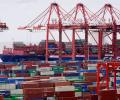
After topping it for two consecutive years, Gujarat slipped three places on the NITI Aayog's Export Preparedness Index (EPI) for 2022, as Tamil Nadu emerged as the most export-ready state, the central think tank said in its report released on Monday. In a continuing trend, coastal states were found to have the most robust export infrastructure, which officials attributed to the integration of maritime trade into the core of their economies. Maharashtra and Karnataka retained their positions -- second and third, respectively; Haryana was ranked first among landlocked states and fifth overall.

8 out of 10 households are planning to cut their tomato consumption if prices stay in the Rs 75-150 kg range over the next three months.

The size of India's middle class will nearly double to 61 per cent of its total population by 2047, from 31 per cent in 2020-21, as continuing political stability and economic reforms with a sustained annual growth rate of between 6 per cent and 7 per cent over the next two and half decades will make the country one of the largest markets in the world. The findings are part of a report released on Wednesday by the People Research on India's Consumer Economy (PRICE) and India's Citizen Environment, a not-for-profit think tank. The report titled, The Rise of India's Middle Class, is based on an analysis of primary data collected by PRICE through its pan-Indian survey.

At a time when climate change poses significant challenges and the need for sustainable and efficient farming practices has never been more critical, unmanned aerial vehicles (UAVs) allow farmers to gain a bird's-eye view of their crops from ground level. Drones have become a new force in precision agriculture, helping increase productivity while prioritising sustainability and resilience. Fertiliser major IFFCO is exploring this very transformative power of technology in agriculture.

Jeera July futures in NCDEX touched a record high of Rs. 58,085 per quintal on Monday, before coming down to around Rs. 55,500 on Tuesday. This was due to profit booking and extension of additional surveillance margin of 2.5 per cent till July 18, including on all contracts to be launched in the future. The softening, according to some reports, is also because of fears of regulatory action on jeera traders over allegations of excessive speculation.

The southwest monsoon has started on a weak note and this has delayed the sowing of kharif crops. Though a cause for concern, the situation hasn't reached a stage where it warrants any panic response. Moreover, according to meteorologists and industry players, monsoon rains will witness a revival in the coming few weeks.

After a gap of more than 13 years, the National Commodity and Derivatives Exchange (NCDEX) is all set to launch a futures contract in groundnut (in shell) to fill a void in oilseeds complex futures because of a ban in several high-volume commodities.

'As long as Amul was coming in with products it was not a problem because it was something value added and with a shelf life.' 'When it gets into the local market by procuring locally, it cuts into the market-share of local cooperatives.'
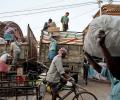
India, along with Southeast Asian countries such as Indonesia, is expected to sustain growth in the medium-term in Asia region, replacing China as the key growth driver, Morgan Stanley and Nomura said in two separate reports released on Monday. While Morgan Stanley projected a 6.2 per cent gross domestic product (GDP) growth forecast for India in FY24, Nomura estimated the Indian economy to grow at 5.9 per cent in 2023. "Even with a slowing China, we expect GDP growth in Asia to sustainably outperform other emerging markets and the US. India and Southeast Asia are set to be the fastest-growing economies this decade.

States have been told to prepare in advance to counter any impact of an adverse southwest monsoon.

India's urban unemployment rate declined in Q4FY23 to 6.8 per cent - the lowest in over four years -- after it stagnated at 7.2 per cent in the previous October-December quarter, reflecting improvement in the labour market, according to the Periodic Labour Force Survey (PLFS) released by the National Statistical Office (NSO) on Monday. The unemployment rate in current weekly status (CWS) terms for all ages in the March quarter was the lowest recorded in more than four years, from the time the NSO released India's first quarterly urban jobless rate for the December quarter in 2018. The jobless rate in urban areas had been on a continuous decline since the peak of 20.8 per cent in the April-June quarter of FY21.

In a significant development, India is believed to have placed a funding request of around $55 million in its first call with the Pandemic Fund of the World Bank, sources said. The fund has been set up to finance critical investments in a bid to strengthen pandemic prevention, preparedness, and response capacities at national, regional, and global levels, with a focus on low- and middle-income countries. It was created in the aftermath of the Covid-19 global pandemic.
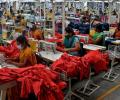
The share of women workers in registered factories submitting annual returns - working more than the statutorily-mandated maximum limit of 48 hours in a week - increased to a 11-year high of 33.6 per cent in 2019, shows the latest annual data released by the labour bureau. In comparison, only 27.9 per cent male workers worked more than the statutorily-mandated hours. Earlier in 2008, 39.2 per cent women workers had worked more than the prescribed work time.

With different agencies showing divergent predictions regarding the southwest monsoon, the central government and states are gearing up to face adversity with various line ministries reportedly being directed to undertake mock drills and hold preparatory meetings. Around 56 per cent of the net cultivable area of the country is rain-fed, accounting for 44 per cent of foodgrain production. The June-September rains contribute around 73 per cent of the annual precipitation.
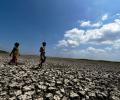
The onset of the southwest monsoon is being keenly watched this year as it may provide an early sign regarding its progress over the Indian subcontinent, particularly when El Nio is expected to rear its head during the latter half of the season.

The churn in Indian labour markets will be led by technology-driven sectors like artificial intelligence and machine learning (38 per cent), followed by data analysts and scientists (33 per cent) and data entry clerks (32 per cent).

Only one in four workers in Karnataka receive a salary, the lowest among the four industrialised states of India, a Business Standard analysis of the latest annual Periodic Labour Force Survey (PLFS) data shows. While 31.6 per cent workers in Gujarat receive regular wages (or salaries), followed by Tamil Nadu (30.3 per cent) and Maharashtra (29.4 per cent), only 25.7 per cent workers in Karnataka receive the same. The figure stands at 21.5 per cent at the national level, according to the 2021-22 PLFS data.
 © 2025 Rediff.com - Investor Information - Advertise with us - Disclaimer - Privacy Policy - Sitemap - Feedback - About us - Terms of use - Grievances